
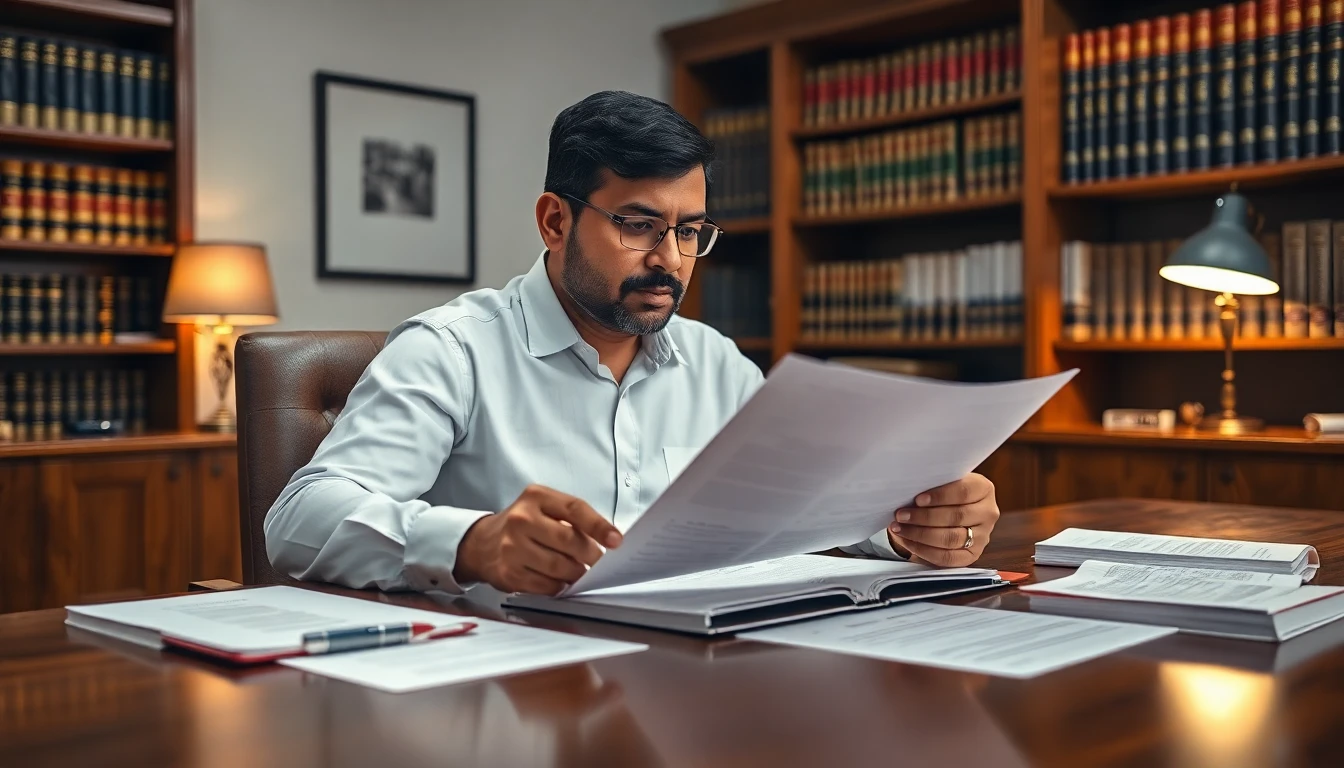
Verifying a property is not in dispute means checking court records, encumbrance certificates, and revenue documents to ensure no ongoing litigation, claims, or legal clouds affect the title. According to the Transfer of Property Act, 1882, a seller must deliver a title free from reasonable doubt, so buyers must conduct due diligence before registration.
I've been a property lawyer in Bangalore for over 20 years. In that time, I've seen buyers lose their entire life savings because they skipped verifying whether a property was in dispute. Don't let that be you. Here's exactly how to check, step by step.
What does 'property in dispute' mean legally?
A property is in dispute when someone has filed a case in court claiming ownership, possession, or a right over it. It could be a family partition fight, a mortgage fraud, or a boundary disagreement. Even if the seller shows you a clean sale deed, a pending case can block your registration or get you dragged into court later.
In Karnataka, you need to check civil court records, revenue records, and the encumbrance certificate (EC) – the record of all registered transactions and loans on a property. A single entry like 'suit filed' or 'attachment order' means trouble.
How do you verify a property is not in dispute in Bangalore?
There are three main checks. Do them in order.
Step 1: Get the encumbrance certificate (EC) for at least 13 years
The EC shows every registered transaction – sale, mortgage, gift, lease. If there's a pending litigation, the court order or lis pendens notice will appear here. You can get the EC from the sub-registrar office or online through the Kaveri portal. Cost: about Rs. 200-500 per year. In 20 years, I've caught unreleased bank mortgages, court attachments, and even a sale by a person who had already died – all from an EC.
Step 2: Check civil court records
Not all disputes show up on the EC. A simple suit for injunction or partition may not be registered. You or your lawyer must search the court database at the jurisdictional civil court (City Civil Court in Bangalore) using the seller's name and property details. This is time-consuming but essential. I've found cases where a brother sued his sister over a property that was being sold to an innocent buyer.
Step 3: Verify revenue records – RTC, mutation, khata
On the Bhoomi portal (for rural) or Kaveri portal (for urban), check the Record of Rights, Tenancy and Crops (RTC). If there's a dispute, the mutation entry might show 'objection' or 'stay'. Also verify the khata – a B Khata property may have unauthorised construction or litigation risks. I've seen properties where the khata was cancelled due to a court order, and the buyer only found out after registration.
What documents do you need to verify a property is not in dispute?
- Mother deed – the original deed tracing ownership back at least 30 years
- Sale deed from the current seller
- Encumbrance certificate for the last 13 to 30 years
- Tax paid receipts and latest paid tax receipt
- Khata certificate and khata extract (A khata or B khata)
- RTC (for agricultural or converted land)
- Approved plan and completion certificate (for apartments)
- No-objection certificates from banks if there was a loan
How long does a dispute verification take?
A basic EC check can be done in a day. But a complete verification – including court searches, revenue records, and title opinion – takes 2 to 7 days depending on the age of the property and court workload. At Legal Brigade, we usually turn around a full title check in 2 to 3 days because we have fixed processes and direct access to court and revenue databases. If your token advance deadline is 5 days, you have time – but don't wait until the last day.
What happens if you skip verifying a property dispute?
You could lose your entire investment. Here's a real story. A client found a great deal in Whitefield. Seller said no disputes. They paid a 10 lakh token advance. I ran an EC and found a 5-year-old mortgage from a private financier that was never released. The seller had taken a loan and defaulted. The financier had filed a suit. The buyer had to file a separate case to get the mortgage released, costing time and money. If they had checked before paying the advance, they would have walked away.
Another client bought a plot without checking court records. Later, a relative of the seller filed a partition suit claiming half the property. The buyer spent 3 years in court and still doesn't have clear title.
How much does property dispute verification cost in Bangalore in 2026?
| Service | DIY Cost | Lawyer Cost (flat fee) | Time | Risk if missed |
|---|---|---|---|---|
| EC for 13 years | Rs. 300-500 | Included in due diligence | 1 day | High – unreleased loans, court orders |
| Court case search | Free (manual) | Rs. 1,000-2,000 | 1-3 days | Very high – pending suits |
| Full title verification + opinion | N/A | Rs. 5,000-10,000 | 2-3 days | Critical – skips all above |
Takeaway: DIY for EC and basic checks can save money, but professional verification covers court cases and revenue records that you might miss. At Legal Brigade, we charge a flat transparent fee – no surprises.
Can you verify a property dispute yourself or do you need a lawyer?
You can check the EC yourself online. You can even visit the court and search by name. But here's the problem: you don't know what to look for. A cryptic entry like 'OS 1234/2020' might mean a routine civil suit or a serious title dispute. A lawyer reads the case details and assesses the risk. Also, lawyers have access to online case status portals that are not public. For a high-value purchase, I strongly recommend a professional check. I've seen too many DIY buyers miss a crucial entry and pay for it later.
What are common red flags that show a property may be in dispute?
- EC shows a mortgage that is not yet released
- EC has an entry 'suit filed' or 'attachment order'
- The seller refuses to share the mother deed
- Property is B Khata or has occupancy certificate issues
- Multiple sale deeds in a short period (flipping)
- Seller's name does not match on all documents
- Mutation entry shows 'objection' or 'stay'
How does RERA help in verifying no dispute for apartments?
Under the Real Estate (Regulation and Development) Act, 2016, builders must register their project with RERA. You can check the RERA website for project details, approvals, and if any complaints are filed. In Karnataka, as of 2025, over 8,000 complaints were filed against builders (Karnataka RERA annual report). A builder with multiple complaints is a red flag. But RERA doesn't cover individual resale flats – you still need a proper title check.
Comparison: A Khata vs B Khata – What It Means for Disputes
| Factor | A Khata | B Khata |
|---|---|---|
| Legality | Property conforms to bylaws | Unauthorised or deviation from plan |
| Bank loan | Easily available | Most banks won't lend |
| Dispute risk | Lower – clear revenue records | Higher – may face demolition, litigation |
| Resale | Easy | Difficult |
Takeaway: B Khata properties are more likely to be in dispute because they violate building rules. Avoid them unless you get a legal opinion.
Frequently Asked Questions
How much does property title verification cost in Bangalore?
At Legal Brigade, our full due diligence includes EC, court search, revenue records, and a title opinion. The flat fee is usually between Rs. 5,000 and Rs. 10,000 for most residential properties. It's a small price compared to the risk of a disputed property. We tell you the fee upfront – no hidden charges.
How long does a property due-diligence check take?
We aim for 2 to 3 days. For urgent cases, we can do a basic check in 24 hours. But a thorough check needs time to search court records and revenue databases. If your token advance has a short deadline, contact us immediately – we can usually meet it.
Can I do property verification myself or do I need a lawyer?
You can do the basic EC check yourself on the Kaveri portal. But court case searches and revenue record interpretation need experience. A lawyer knows what to look for and can give you a written title opinion. For high-value deals, I always recommend a professional.
What is an encumbrance certificate and why is it important?
An EC is a record of all registered transactions on a property for a given period. It shows sales, mortgages, gifts, and court orders. If there's a pending dispute, the court order will appear in the EC. Without it, you might buy a property that has an outstanding loan or a legal claim.
What if I find a pending court case after I buy?
It's not necessarily the end. You may be able to approach the court and get the case disposed or your title cleared. But it will cost time and legal fees. In some cases, you might lose the property. That's why pre-purchase verification is critical.
Does an agreement of sale protect me if the property is in dispute?
An agreement of sale gives you a right to sue for specific performance, but it doesn't give you ownership. If there's a prior dispute, the court may not order the seller to transfer title. The agreement is not a substitute for a proper title check.
What is lis pendens and how does it affect my purchase?
Lis pendens is a legal notice that a property is under litigation. It is registered in the sub-registrar office. Once lis pendens is registered, any sale during the pendency of the suit is subject to the court's final decision. You can't get a clear title until the suit is resolved. Always check for lis pendens entries in the EC.
If you've got a token advance riding on a deadline, don't gamble on it. At Legal Brigade we usually turn a full title check around in two to three days at a flat, upfront fee – send us the documents and we'll tell you exactly where you stand. You can book a free property consultation to get started. For more help, see our property document verification in Bangalore page. And read our more property buying guides to avoid common mistakes.
Written by Advocate Raghavendra S C, a Bangalore-based property lawyer with 20+ years of practice in property title verification, due diligence, registration, and civil litigation across Karnataka courts and sub-registrar offices. For a property title check or due-diligence opinion in Bangalore, contact Legal Brigade at legalbrigade.co.in.